pelagikos is working with the DFAR and fishing communities to improve the biological status and management of pink-eared emperor fisheries in Jaffna and Batticaloa Fisheries Districts and a five-lined snapper fishery in Batticaloa Fisheries District. .
Pink-eared emperors
Biology & Ecology: Pink-eared emperors (Lethrinus lentjan) are found in both marine and brackishwaters. Juveniles and small adults form resident shoals associated with mangroves, seagrass meadows, rocky reefs and coral reefs. Pink-eared emperors are long-lived (38 yrs). Larger adults (to 380 mm) are solitary and found further offshore to a depth of 90 meters. Rather unhelpfully, pink-eared emperors are monadric protogynous hermaphrodites whereby all males in a population are derived secondarily from functional females. The length at sex change has been estimated as 308 mm (TL). Pink-eared emperors feed mainly on invertebrates (e.g. crustaceans, molluscs, echinoderms and polychaetes) and may also predate on small fishes.
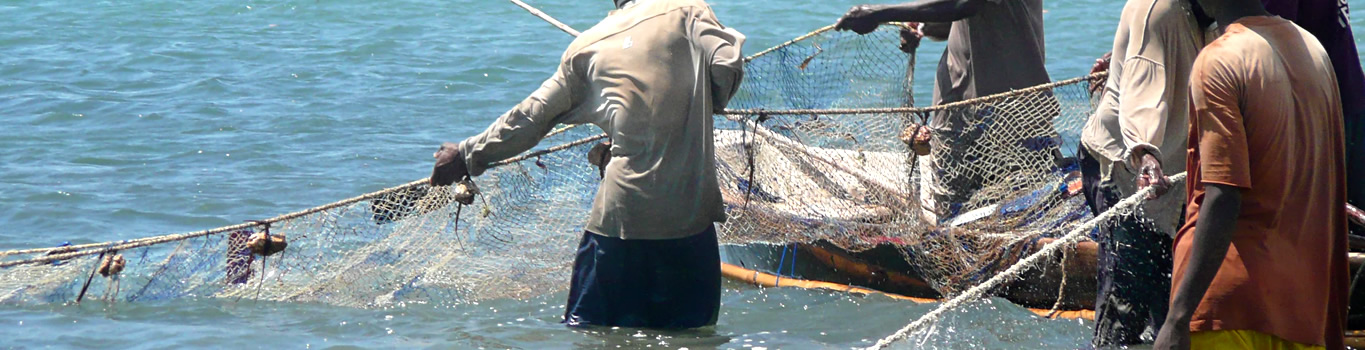
Fisheries & Status: Pink-eared emperors are caught using bottom-set longlines with No. 12, No. 14 and No. 16 sized hooks off the north coast of Jaffna Fisheries District (Koththady) and using bottom set longlines and bottom-set gillnets in Batticaloa Fisheries District (Nasivanthivu). Fishermen use motorised fibre-reinforced boats to set longlines and gillnets. The catch is sold fresh to local vendors or transported fresh to regional wholesale seafood markets. Protogynous hermaphrodite species represent a challenge to length-based fishery assessment methods that rely on female size on sexual maturity and asymptotic length to estimate stock status, biomass and recruitment overfishing. Studies conducted by pelagikos in 2023 and 2024 suggest that that stock status is sustainable, but the spawning biomass is overfish. Growth overfishing was a moderate concern. The extent of recruitment overfishing was difficult to ascertain.
Sustainable Seafood: The DFAR is working with fishing communities in Jaffna and Batticaloa Fisheries District to increase the spawning biomass by reducing the level of growth overfishing in the tw fisheries. Setting and enforcing a minimum hook size in longline fisheries and a mesh size for bottom-set gillnets are key Input Controls that will lead to higher and sustainable levels of production in the future.
Useful links, downloads & videos
Species Profile: Pink-eared emperor
Pink-eared emperor fishery assessment, Jaffna District 2023/24.
Pink-eared emperor fishery assessment, Batticaloa District 2023/24.
The five-lined snapper
Biology & Ecology: The five-lined snapper (Lutjanus quinquelineatus) are long-lived (31 yrs), medium sized (308 mm) marine / brackishwater fish associated with coral and rocky reefs to a depth of 40 meters and in shallow, sheltered lagoons and seagrass meadows. Adults form small shoals and feed on other fishes and crustacean.
Fisheries & Status: Five-lined snappers are caught using using bottom set longlines (No. 12, 13 and 14 sized hooks) and bottom-set gillnets in Batticaloa Fisheries District (Nasivanthivu). Fishermen use motorised fibre-reinforced boats to set longlines and gillnets. The catch is sold fresh to local vendors or transported fresh to regional wholesale seafood markets. Studies conducted by pelagikos in 2023 and 2024 suggest that that stock status is sustainable, but the spawning biomass is overfish. Growth overfishing was a moderate concern. The extent of recruitment overfishing was difficult to ascertain.
Sustainable Seafood: The DFAR is working with fishing communities in Jaffna and Batticaloa Fisheries District to increase the spawning biomass by reducing the level of growth overfishing in the tw fisheries. Setting and enforcing a minimum hook size in longline fisheries and a mesh size for bottom-set gillnets are key Input Controls that will lead to higher and sustainable levels of production in the future.
Useful links, downloads & videos
Species Profile: Five-lined snapper
Five-lined snapper fishery assessment, Batticaloa District 2023/24.
pelagikos has been working with fishing communities and Fisheries District Offices of the DFAR since 2017 to declare FMAs one each at the Fisheries District Office level. The declaration of Fisheries District Fisheries District FMAs, the formation of Fisheries Committees at the Fisheries Inspector Division level and Fisheries Management Coordinating Committees at the district level are simple, practical and administratively apposite ways to move coastal fisheries from instructive to consultative or collaborative forms of management.
Fisheries Management Areas: The legal provisions for managing fisheries at the local level are set out under Fisheries and Aquatic Resources (Amendment) Act, No. 35 of 2013. Key provisions include declaration of Fisheries Management Areas; establishment of Fisheries Management Coordinating Committee, Fisheries Committees and Fisheries Development and Management Plans for each FMA Development and Management Plans. 18 FMAs have been declared to date, however Fisheries Development and Management Plans have yet to be prepared by the Fisheries Management Coordinating Committee and or approved by the Director General an or gazetted by ministry.
Fisheries Management: DFAR officers based in 15 Fisheries District Officers - together with the Management Division of the DFAR in Colombo - are responsibility for managing and regulating 100,000 coastal fishermen, operating 45,000 or so small scale fishing craft, harvesting more than 30 species of pelagic and demersal finfish, assorted crustaceans, molluscs and holothurians at 760 landing centres along Sri Lanka’s 1,700 km coastal line. Almost all of the 100 or more coastal fisheries / populations are seasonal and some target stocks are migratory.
Useful links and downloads
Fisheries and Aquatic Resources (Amendment) Act, No. 35 of 2013
Declared FMAs and proposed Fisheries District FMAs
Types of fisheries management
Our Approach & Methodology
Pelagikos begins with evidence-based assessment, analyzing fisheries, ecosystems and community needs to design practical and sustainable management strategies.
We implement solutions collaboratively with communities, industry, and government, ensuring compliance, monitoring, and long-term conservation impact.
Get in touch with us today to discuss further.
Key focus
Pelagikos focuses on sustainable fisheries management, protecting marine biodiversity, and preventing illegal fishing, ensuring responsible use of Sri Lanka’s coastal, offshore, and high-seas resources.
Sustainable Fisheries Management
Conservation & Protection.
Compliance & Illegal Fishing Prevention
Expertise in Marine Fishery
Pelagikos offers expert guidance on managing Sri Lanka’s marine fisheries, blending scientific research, community collaboration, and policy support to promote sustainable practices.
We promote responsible fishing practices, protect marine biodiversity, develop marine protected areas, and reduce the impact of fishing on endangered and protected species.
Pelagikos works closely with fishing communities, seafood exporters, government agencies, and non-government organizations to improve fisheries management and ensure sustainability.
Sri Lanka’s marine fisheries include coastal, offshore, and high-seas sectors, supporting thousands of fishermen while facing challenges like overfishing and ecosystem pressures.
Marine conservation ensures sustainable fish stocks, protects biodiversity, and supports livelihoods, while maintaining the health of coastal and offshore ecosystems.