pelagikos is working with the DFAR, fishing communities, local agents and exporters to improve the biological status and management of giant mud crab fisheries in Mannar, Batticaloa, Kilinochchi and Puttalam districts.
Biology & Ecology: The giant mud crab or mangrove crab (Scylla serrata) is one of four species of mud crab found in Sri Lanka. The giant mud crabs is the largest and commercially the most important of the four species. Male giant mud crabs can reach weight of more than 3 kilos and measuring more than 280 mm (carapace width). Juvenile mud crabs tend to be found predominantly in mangrove areas, sub-adults in the intertidal and sub-tidal zone and feeding in shallow waters, while adults remain in deeper, sub-tidal waters. Giant mud crabs feed on sessile or slow moving benthic invertebrates, locating their prey by means of chemoreception. Their diverse diets often include other crab species, including smaller, weaker giant mud crabs, other crustaceans, bivalve molluscs and fish. Females and males mate after the female moults, then the female migrates to deeper waters to spawn several batches of eggs, with each batch containing more than 100,000 eggs.
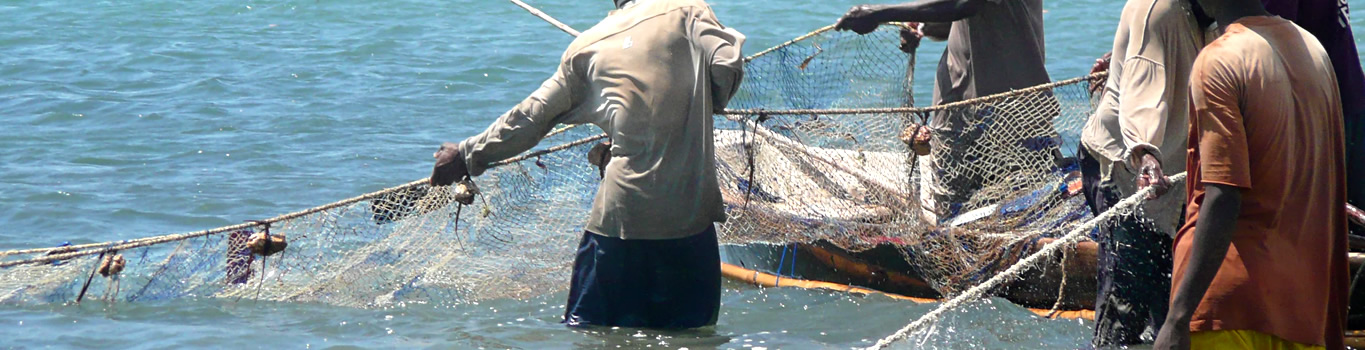
Fisheries / Stocks: The number of giant mud crab populations in Sri Lanka is unknown. Locally important fisheries are found in lagoons and estuaries at Koggala, Negombo, Chilaw, Puttalam, Jaffna, Chundikulam, Nandikadal, Kokkilai, Vahari, Valachenai and Batticaloa. Giant mud crabs are also harvested from Tambalagam Bay and along the inner, eastern shoreline of the Palk Bay. Fishermen harvest giant mud crabs using drifting entangling nets operated from / attached to non-motorised and motorized small scale fishing craft. Giant mud crabs are also caught using traditional woven cane traps and by hand using dip nets in shallow waters at night. The stock status of giant mud crab fisheries in Mannar and Batticaloa was sustainable in 2024/25, while the biomass was fished at or below maximum sustainable yield. High demand from domestic consumers and tourism, as well as exporters is likely to be responsible for growth overfishing observed in both fisheries in 2024/25.
Production & Markets: Giant mud crabs are sold alive to domestic and exported to international seafood markets. XXXX kg of giant mud crab with a value of US$ 123 456 were exported in 2024. Singapore, Malaysia and China were the top three giant mud crab export markets.
Sustainable Seafood: No steps or measures have taken by the seafood export industry or top Sri Lankan hotels and restaurants to ensure that giant mud crab are sourced from biologically and ecologically sustainable fisheries.
Useful links, downloads & videos
Species Profile: Giant Mud Crab
Mannar District Fishery Assessment, 2024/25.
Batticaloa District Fishery Assessment, 2023/24
|